
- All
- Product Name
- Product Keyword
- Product Model
- Product Summary
- Product Description
- Multi Field Search

Views: 196 Author: Site Editor Publish Time: 2025-09-01 Origin: Site


Carbon conductive film is a specialized material designed to combine flexibility, conductivity, and stability, making it an essential component in modern electronic and energy-related products. Unlike traditional metallic conductive layers, carbon conductive films rely on carbon black or other carbon-based additives that provide excellent conductivity while maintaining thinness and flexibility. These films are manufactured on polymer substrates such as polyethylene (PE), enabling large-scale production at relatively low cost.
The primary appeal of carbon conductive film lies in its ability to maintain electrical conductivity while being lightweight, flexible, and resistant to corrosion. This makes it extremely valuable for applications where conventional rigid electrodes or metallic foils are unsuitable. Today, its applications span across several industries, including medical electrode products (ECG, TENS), physiotherapy electrodes for EMS fitness, electromagnetic shielding, heating products, and advanced energy storage devices such as batteries.
In particular, heating applications and energy battery electrodes have witnessed a growing demand for this film due to its efficiency, adaptability, and eco-friendly potential. By replacing or supplementing metallic conductors, carbon conductive films improve both product performance and user comfort.
Heating applications require materials that can deliver uniform heat distribution, operate safely at low voltages, and adapt to diverse surfaces. Carbon conductive film fulfills these requirements because it is thin, flexible, and capable of generating heat evenly when electrical current passes through its carbon network.
One of the most common uses of carbon conductive film in heating products is in wearable or portable heaters, such as heated clothing, seat warmers, and therapeutic heating pads. Unlike metal wires that concentrate heat in specific areas, the film spreads the current over a larger surface, reducing hotspots and enhancing safety. Its resistance can be engineered by adjusting the amount and distribution of carbon black within the film, allowing precise control of heat generation.
Another advantage is the durability of carbon conductive film under repeated bending or stretching. In heating pads used for physiotherapy or sports recovery, flexibility is critical because the electrode or pad must conform to body contours. The film’s lightweight structure ensures comfort while maintaining consistent heating performance. Moreover, since carbon is resistant to oxidation, the film maintains long-term stability even with continuous use.
From an energy efficiency perspective, carbon conductive film reduces power consumption because it requires less current to achieve the same heating effect compared to metallic alternatives. This makes it suitable for low-voltage DC systems, commonly used in portable and battery-powered heating devices. In addition, carbon conductive film contributes to eco-friendly design since it can be produced without heavy metals and is recyclable depending on the substrate.
In summary, carbon conductive film has transformed heating technologies by providing uniform, safe, and energy-efficient thermal solutions. Its adaptability ensures widespread use in medical, consumer, and industrial heating applications.
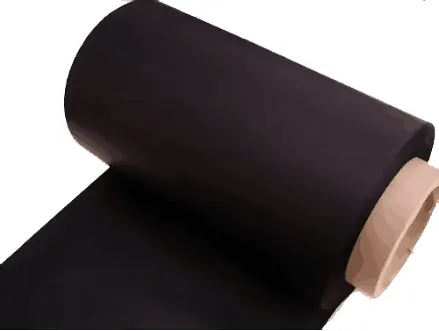
Energy storage is at the heart of modern technology, and carbon conductive film plays a key role in improving the performance of battery electrodes. In traditional batteries, metallic foils such as aluminum and copper are used as current collectors. However, these materials add weight, reduce flexibility, and face limitations in high-cycle stability. By introducing carbon conductive films, battery manufacturers gain an alternative that is lightweight, chemically stable, and compatible with advanced electrode formulations.
In lithium-ion and other next-generation batteries, carbon conductive films can serve as a coating or as a flexible electrode layer that enhances conductivity across the electrode surface. This ensures efficient electron transport, minimizing resistance and improving overall charge-discharge rates. The film also helps in stabilizing electrode materials by forming a uniform conductive matrix, reducing the formation of hotspots or irregular current distribution.
Carbon conductive films are particularly valuable for thin and flexible batteries, which are becoming increasingly important in wearable devices, smart textiles, and portable electronics. Their flexibility allows batteries to be integrated into non-traditional shapes without sacrificing conductivity. Additionally, the inherent resistance to corrosion improves the long-term durability of the electrodes, reducing degradation over multiple charge cycles.
Another significant application is in large-scale energy storage systems, where efficiency and cost-effectiveness are crucial. Carbon conductive films enable lighter, more efficient electrode structures, which can help reduce manufacturing costs while enhancing performance. When combined with advanced electrode materials such as graphene or conductive polymers, carbon conductive films create hybrid solutions that push the boundaries of battery technology.
Ultimately, the use of carbon conductive film in battery electrodes represents a shift towards sustainable, lightweight, and high-performance energy solutions that align with the growing demand for renewable energy integration and electric mobility.
| Feature / Property | Heating Applications | Energy Battery Electrodes |
|---|---|---|
| Function | Generates uniform heat over large surfaces | Provides conductive layer for current collection |
| Flexibility | Critical for wearable heaters and pads | Important for flexible and thin-film batteries |
| Durability | Withstands repeated bending and use | Resists corrosion, ensures long cycle life |
| Energy Efficiency | Reduces power consumption at low voltages | Enhances charge/discharge efficiency |
| Safety | Minimizes hotspots, safe for skin contact | Stabilizes electrode reactions, reduces risks |
| Industry Adoption | Medical, consumer electronics, automotive | Portable devices, electric mobility, grid storage |
The unique properties of carbon conductive film make it an attractive choice across multiple industries. Some key advantages include:
Lightweight Structure – Ideal for products that require portability and comfort.
Flexibility and Conformity – Adapts to irregular shapes, essential for wearables and flexible electronics.
High Electrical Conductivity – Ensures efficient energy transfer in both heating and electrode applications.
Chemical Stability – Resistant to oxidation and corrosion, ensuring long-term performance.
Eco-Friendly Potential – Avoids reliance on heavy metals and supports recyclable designs.
These benefits collectively explain why industries increasingly replace traditional metallic components with carbon conductive films.
Q1: Is carbon conductive film safe for use in medical heating pads?
Yes, carbon conductive film is safe because it provides uniform heating without hotspots, reducing the risk of burns. Its flexibility also ensures comfort for patients.
Q2: How does carbon conductive film improve battery performance?
By offering lightweight and highly conductive surfaces, the film reduces internal resistance, improves charge and discharge rates, and extends battery lifespan.
Q3: Can carbon conductive films be customized for different applications?
Absolutely. The conductivity, thickness, and resistance levels can be adjusted by altering the formulation and carbon black concentration, making the film suitable for diverse applications.
Q4: Are carbon conductive films environmentally friendly?
Compared to metal-based conductors, carbon conductive films are lighter, may be recyclable depending on substrate choice, and avoid reliance on heavy metals, making them more eco-friendly.
Carbon conductive film has emerged as a pivotal material in the advancement of both heating products and energy battery electrodes. In heating applications, it delivers safe, efficient, and uniform warmth, revolutionizing everything from medical electrodes to wearable heaters. In the field of energy storage, it provides lightweight, flexible, and corrosion-resistant alternatives to metallic current collectors, supporting the future of portable and large-scale batteries alike.
As industries continue to prioritize performance, safety, and sustainability, carbon conductive film will remain at the forefront of innovation. Its versatility ensures that it will play a central role in shaping the future of medical devices, consumer electronics, renewable energy storage, and beyond.
