
- All
- Product Name
- Product Keyword
- Product Model
- Product Summary
- Product Description
- Multi Field Search

Views: 0 Author: Site Editor Publish Time: 2026-05-20 Origin: Site


Up to 33% of electrical product losses tie directly to electrostatic discharge (ESD) across the industry. Component breakdown happens rapidly, often occurring at voltages as low as 30V during routine handling. This represents a massive vulnerability for modern electronics manufacturing. While catastrophic failures usually get caught in quality assurance, hidden "latent defects" caused by inadequate packaging quietly slip through the cracks. These unseen flaws degrade long-term reliability and trigger frustrating, intermittent field failures once products reach consumers.
We created this guide to give procurement managers and packaging engineers a clear, evidence-based framework. You will learn how to properly specify black conductive PE roll film to protect sensitive electronic component packaging. Our goal is to help you select the exact right material, eliminate guesswork, and avoid over-engineering your protective packaging setup.
Black conductive PE film relies on a carbon-loaded matrix, making its ESD protection permanent and completely independent of ambient humidity.
Unlike metalized shielding films that lose efficacy when creased or punctured, volume-conductive black PE maintains a consistent conductive path.
Selecting roll film or tubing over pre-cut bags reduces inventory SKU bloat by allowing on-demand custom lengths via impulse sealing.
Validating manufacturer compliance with standards like MIL-PRF-81705D ensures the material will not shed carbon (sloughing) onto precision components.
Packaging engineers frequently face a choice between various ESD-safe materials. Understanding the exact mechanical limits of each option prevents critical failures during transit.
Manufacturers often default to standard pink anti-static packaging film for cost reasons. This material prevents tribocharging, which means it stops friction-based static from building up when parts rub together. However, pink poly relies entirely on humectant additives. These chemicals must draw moisture from the ambient air to form a microscopic, conductive sweat layer on the plastic surface.
This creates a severe vulnerability. In low-humidity environments, such as dry winter months or climate-controlled airplane cargo holds, pink film protection degrades rapidly. The surface dries out, leaving your sensitive hardware completely exposed to static accumulation.
Upgrading to black conductive materials solves the humidity problem permanently. These polymers utilize embedded carbon black or advanced graphene networks. The carbon particles physically touch each other inside the plastic matrix. This physical connection guarantees static dissipation regardless of surrounding climate conditions.
Because the material conducts electricity through its physical structure rather than a surface moisture layer, it never expires. This permanence makes carbon-loaded materials mandatory for long-haul shipping, global distribution networks, and deep-storage applications. You can safely store parts for years knowing the static protection remains active.
Four-layer silver shielding bags offer superior Faraday cage effects to block external electromagnetic fields. They remain excellent choices for specific microprocessors. However, their metalized layers present a mechanical flaw. When workers crumple, fold, or aggressively handle silver bags, the microscopic aluminum shield can micro-fracture.
Once fractured, the bag loses its Faraday cage integrity. Static electricity can easily penetrate the broken barrier. Black conductive film avoids this issue entirely. It maintains structural integrity and reliable conductive pathways even under heavy physical stress. You can bend it, fold it, or wrap it tightly around sharp objects. The carbon network simply flexes, ensuring the protective electrical path remains unbroken.
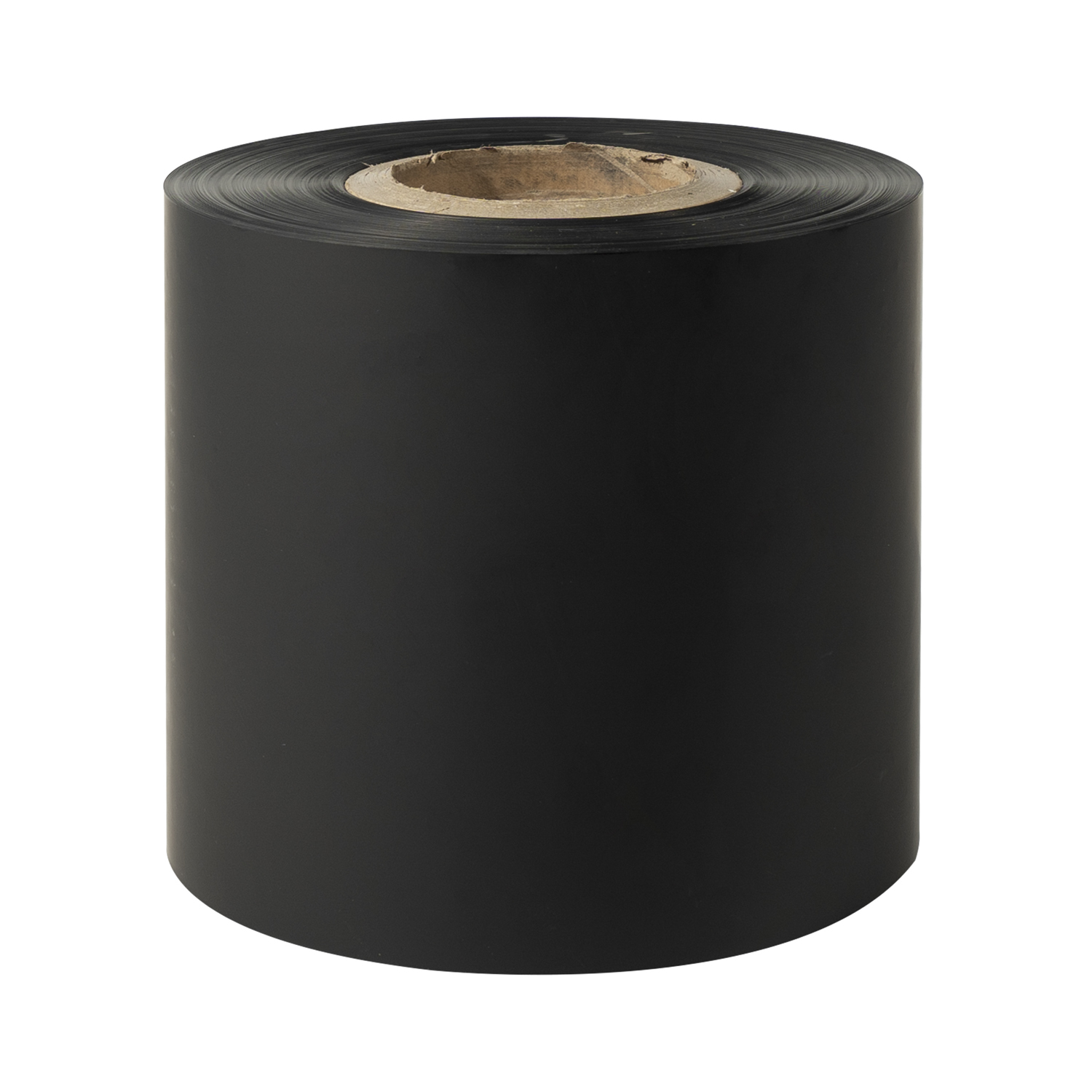
You cannot rely on simple visual inspections to verify ESD protection. Purchasing departments must demand strict adherence to measurable electrical and mechanical benchmarks when sourcing ESD PE roll film.
Electrical resistance defines how quickly a material moves a static charge to the ground. You must look for a verified surface resistivity between 10⊃3; to 10⁵ ohms per square to achieve true conductive performance.
Many suppliers incorrectly market materials measuring 10⁶ to 10⊃1;⊃1; ohms as conductive. Technically, these higher ranges classify as dissipative. While dissipative materials work well for human contact areas, they move charges too slowly for critical barrier packaging.
Always ensure your supplier clearly distinguishes between surface resistance and surface resistivity. Resistance measures point-to-point flow and varies based on probe placement. Resistivity (ohms per square) measures the inherent material property, giving you a reliable baseline across the entire roll.
Resistivity tells only half the story. You also need to know how fast the packaging sheds an active voltage spike. Quality black conductive film must dissipate a 5,000-volt (5kV) charge down to zero in under 1.0 second.
If the discharge time exceeds one second, you risk localized charge pooling. Pooled charges can jump as a spark onto nearby pins, instantly destroying micro-circuitry. Demand documented discharge testing from the manufacturer before finalizing any bulk orders.
A film must survive the physical realities of the warehouse floor. Evaluate tensile strength and puncture resistance closely. This becomes critical when you package sharp plastic trays, sharp-edged wafers, or rigid printed circuit boards (PCBs).
Standard thicknesses usually range from 75 microns (3 mil) to over 100 microns (4 mil).
75 microns: Offers excellent flexibility. Ideal for wrapping lightweight components or creating standard heat-sealed pouches.
100+ microns: Delivers high puncture resistance and mild physical cushioning. Best for heavy, sharp, or irregular industrial hardware.
The table below summarizes the key differences between common ESD packaging classes to help you contextualize these metrics.
Material Type | Surface Resistivity | Discharge Speed | Humidity Dependent? |
|---|---|---|---|
Pink Anti-Static (Basic) | 10⊃1;&sup0; to 10⊃1;⊃2; ohms/sq | Slow (>2.0 seconds) | Yes |
Dissipative PE (Moderate) | 10⁶ to 10⁹ ohms/sq | Medium (1.0 - 2.0 seconds) | Often |
Black Conductive (High) | 10⊃3; to 10⁵ ohms/sq | Fast (<1.0 second) | No |
Global electronics manufacturers rely on military specifications to ensure baseline quality control. Understanding these codes prevents costly compliance failures when auditing your supply chain.
Buyers often confuse material standards and conversion standards. You must distinguish between the two to audit suppliers accurately.
MIL-PRF-81705 dictates the actual performance and chemical makeup of the raw material. It defines what the black ESD film is made of. Conversely, MIL-DTL-117 dictates how factories convert that material into bags. It governs heat-sealing strength, seam tolerances, and exterior markings.
For single-layer, carbon-loaded plastics, you should specifically look for compliance with MIL-P-82646 Rev B. This standard explicitly governs flexible, conductive packaging, ensuring the polymer matrix maintains stable electrical properties across varying temperatures.
We often see companies purchase cheap carbon-loaded films to save budget. This creates a severe operational hazard known as particulate shedding, or "sloughing." Poorly manufactured films fail to bind the carbon black securely within the polyethylene resin.
When workers rub or fold the material, microscopic conductive carbon dust flakes off. This dust lands directly on precision components, bridging microscopic gaps and causing hard shorts. You must explicitly specify "non-sloughing" materials. This guarantees cleanroom compatibility and protects your delicate micro-circuitry from internal contamination.
Your packaging must fit seamlessly into your broader Electrostatic Protected Area (EPA) control plan. European standard EN 61340-5-1 outlines strict protocols for handling sensitive electronics.
Compliant black poly provides a highly reliable, groundable surface. When grounded personnel handle the packaged goods, the conductive exterior instantly neutralizes any stray charges transferring from the worker's gloves or garments. Ensure your safety auditors review the material documentation to keep your EPA certification intact.
Procurement teams usually debate whether to buy pre-made pouches or continuous rolls. Shifting toward continuous rolls significantly improves warehouse operations and processing flexibility.
Purchasing material in continuous tubular form offers a massive scalability advantage. Facility operators keep the tubing on a heavy-duty dispenser at the packing station. Workers pull the exact length needed for each specific device.
Using standard impulse sealers, operators cut and seal the packaging precisely to the product's dimensions. This custom-fit approach eliminates excessive loose plastic inside the package, preventing internal movement and physical abrasion during transit.
Relying on pre-cut bags forces warehouses to stock dozens of different sizes. You end up managing a bloated, complex inventory system. Some SKUs run out constantly, while odd sizes sit on shelves collecting dust.
Transitioning to continuous tubing eliminates this SKU bloat entirely. You only need to stock two or three different roll widths. Your team can generate infinite length variations on demand. This simplified approach directly improves warehousing efficiency and frees up valuable shelf space.
Before executing a bulk order, you must verify the material's melting point and seal-strength metrics. Carbon-loaded polymers behave differently under heat compared to standard clear plastics.
If your existing heat-sealing hardware runs too hot, it will degrade the carbon matrix and cause brittle, weak seams. If it runs too cold, the plastic will fail to fuse. Request testing data from the supplier to ensure their product matches your equipment's temperature and dwell-time capabilities.
Selecting a manufacturing partner requires due diligence. Never rely on marketing brochures alone. Follow these concrete steps to vet potential suppliers effectively.
Demand Technical Data Sheets (TDS): Do not accept generalized claims of "anti-static properties." Require documented, third-party verified metrics for surface resistivity, static discharge time, and tensile strength.
Request Physical Samples for Friction Testing: Test the film directly on your production line. Ensure the tubing opens easily. High slip friction forces workers to struggle, slowing down daily throughput. The material must be manipulated without excessive force.
Verify Quality Control Tools: Ask potential suppliers how they test roll consistency. Reputable factories use automated, inline surface resistivity meters. These sensors continuously scan the plastic during extrusion to guarantee no "dead spots" exist in the carbon matrix across a 4,000-meter roll.
Check Cleanroom Certifications: If you assemble optics or aerospace components, request cleanroom manufacturing documentation to guarantee a truly non-sloughing surface.
Transitioning to conductive PE film remains a strategic decision for any serious electronics manufacturer. It actively eliminates the latent defects caused by inadequate, humidity-dependent packaging solutions. By moving away from standard pink poly, you remove environmental variables from your quality control equation entirely.
Prioritize permanent volume conductivity and strictly enforce non-sloughing requirements when reviewing vendor specifications. Furthermore, adopting continuous roll tubing provides unmatched operational flexibility, cutting down your inventory overhead while speeding up the packing line. Implement these practices today to secure highly sensitive electronics against both catastrophic breakdown and creeping field failures.
A: Professionally, use a surface resistivity meter (conductive will read < 10⁵ ohms). For a rapid, unofficial floor test, conductive film will often trigger a smartphone's capacitive touch screen due to its conductivity, whereas standard pink anti-static film will not.
A: It provides a moderate, partial barrier to external electrical fields due to its conductive nature, but it does not offer the full electromagnetic interference (EMI) and electrostatic shielding of a multi-layer metalized silver bag.
A: Standard single-layer black conductive PE is generally not designed as a high-barrier moisture or oxygen film. If vacuum sealing and moisture barrier properties are required alongside ESD protection, a specialized moisture barrier film (often opaque, combining foil and ESD layers) is required.
