
- All
- Product Name
- Product Keyword
- Product Model
- Product Summary
- Product Description
- Multi Field Search

Views: 0 Author: Site Editor Publish Time: 2026-08-05 Origin: Site


For manufacturers of sensitive ICs, SMTs, and PCBA boards, the journey from the production line to the end-user is fraught with invisible hazards. Specifically, micro-humidity and electrostatic discharge (ESD) pose constant threats to high-value electronics. Modern semiconductor geometries shrink smaller every year. Consequently, they become incredibly fragile. A tiny static shock can instantly vaporize internal traces. Relying on basic plastics or standard shipping materials frequently leads to unpredictable failure rates. Basic bags might stop minor friction charges, but they leave components completely exposed to external shocks. Furthermore, they allow moisture ingress over time. This exposure causes silent microscopic damage. You must rethink your protective measures completely. We should frame the anti-static aluminum foil bag not just as a simple packaging material, but as an engineered compliance requirement. It actively protects business margins. It ensures complete component integrity during global transit. In this guide, you will learn exactly how multi-layer shielding prevents catastrophic failures. You will discover why DIY foil solutions destroy components. Finally, we will show you how to implement strict packaging protocols on your production line.
Standard "pink poly bags" only prevent internal static generation; they do not shield against external ESD or moisture.
A true anti-static aluminum foil bag utilizes a 4-layer structure to create a Faraday cage, blocking EMI and providing a heavy-duty moisture barrier.
Attempting to use standard pure aluminum foil as a substitute causes rapid, fatal electrostatic discharge (0-ohm resistance) and risks battery short-circuits.
Proper implementation requires dedicated vacuum or heat sealing; reusing bags compromises the internal dissipative layers and voids protection.
When you evaluate standard electronic component packaging, its severe limitations quickly become obvious. Let us first examine the widespread use of standard pink poly bags. Many facilities mistakenly rely on them for complete protection. These bags use low-density polyethylene (LDPE) coated with chemical anti-static agents. They only prevent triboelectric charging. This simply means they stop friction-induced static from building up when components rub together inside the bag. However, they offer absolutely zero external shielding. Imagine a warehouse worker generating static while walking across a floor. A static shock from their hand will pass straight through the pink plastic. The bag does nothing to stop the external voltage spike. Furthermore, pink poly bags provide absolutely no moisture protection. They are porous at a microscopic level.
Next, we must consider the insidious mechanism of moisture damage. Ambient humidity easily penetrates basic plastic bags during shipping. Once inside, this moisture initiates microscopic corrosion on sensitive semiconductor pins and solder joints. It causes oxidation. As water evaporates, it leaves behind harmful mineral residue. Over time, this conductive residue bridges tiny gaps in high-density components. This inevitably leads to short-circuiting when you finally power up the board. The damage remains completely invisible until the final test fails.
Finally, we face the complex "dry air" paradox. To prevent this severe moisture damage, many manufacturing facilities maintain highly controlled dry environments. HVAC systems scrub moisture from the air. Dry air effectively stops corrosion. Yet, it drastically increases the risk of severe ESD events. Static electricity builds up much faster in low humidity conditions. Therefore, you cannot simply fix one problem without aggravating the other. You absolutely need a dual-protection solution. You must combat both humidity and static threats simultaneously to ensure product survival.
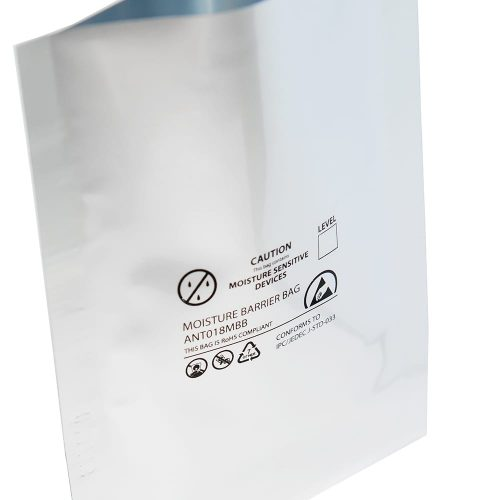
A reliable protective bag relies on advanced composite engineering. It is not just a single piece of plastic. Let us deconstruct the standard four-layer structure. It typically consists of PET, AL, PA, and PE layers working in perfect harmony.
Layer Position | Material Type | Primary Engineering Function |
|---|---|---|
Outer Layer | PET (Polyester) | Provides physical insulation and excellent puncture resistance against external handling. |
Core Layer | AL (Aluminum) | Establishes the vital Faraday cage and acts as a robust moisture barrier bag. |
Middle Layer | PA (Nylon) | Adds structural durability, flexibility, and essential tear resistance. |
Inner Layer | PE (Polyethylene) | Functions as the critical static-dissipative layer touching the sensitive components. |
Now, let us examine the core shielding mechanism in detail. This multi-layer structure serves as a highly effective EMI shielding bag. The solid aluminum core creates a continuous Faraday cage effect. It completely blocks external electromagnetic fields. It stops radio frequencies from interfering with unpowered circuits. If a stray static charge strikes the exterior of the package, the metal layer safely routes the energy around the sensitive contents. The harmful voltage never penetrates the bag. It acts exactly like a lightning rod diverting a strike.
Controlled dissipation is equally critical to the bag's success. The inner PE layer touches your delicate components directly. It features a highly controlled surface resistance. This resistance typically ranges from 10^6 to 10^11 ohms per square. Why does this exact range matter so much? It slowly and safely bleeds off electrical charges. A sudden, zero-resistance discharge easily destroys delicate microscopic geometries. This high-resistance layer ensures built-up charges dissipate over milliseconds. It neutralizes potential threats safely without creating harmful current spikes.
You might see intense debates on engineering forums suggesting cheap alternatives. Some hobbyists claim pure household aluminum foil works perfectly for circuit boards. This is a highly dangerous myth. Let us address the terrifying 0-ohm hazard. Pure aluminum foil is a near-perfect electrical conductor. It has essentially zero ohms of resistance. If an ESD event occurs near the foil, the current discharges instantly. We are talking about mere nanoseconds of transfer time. This rapid transfer creates massive voltage spikes. These spikes punch right through delicate semiconductor gates. Effective ESD protection requires extremely slow dissipation. It does not tolerate instant conduction.
Next, consider the severe physical puncture risk. Bare PCB pins and sharp solder joints easily pierce pure household foil. Foil possesses virtually zero tensile strength. Once pierced, the foil completely loses its protective Faraday cage effect. Worse, a torn piece of foil risks shedding tiny, conductive metal flakes directly onto your circuit board. These microscopic flakes lodge between pins. They cause invisible short circuits when the end-user applies power. You effectively create the very problem you tried to avoid.
Finally, we must strongly warn against the notorious "battery bomb" effect. Never wrap an active motherboard in pure conductive foil. If the board contains a CMOS or coin cell battery, the foil instantly bridges the positive and negative terminals. It creates a massive short circuit across the battery. It instantly drains the cell's power. In many documented cases, it creates severe thermal hazards. The rapidly discharging battery heats up dramatically. It can potentially melt nearby plastics or even start a localized fire on your workbench.
Upgrading your packaging strategy makes excellent financial sense. Let us compare the baseline cost of failure versus the cost of prevention. The fractional per-unit cost of an ESD aluminum foil bag remains microscopic. You might spend just a few extra cents per unit compared to standard plastic. Now, compare this minor expense against the hard costs of component failure. You face rigorous RMA processing. You pay for expensive diagnostic labor. You suffer significant production delays. A single fried IC board easily wipes out the meager savings gained from buying thousands of cheap bags. Prevention always pays for itself immediately.
Furthermore, proper packaging acts as a vital quality assurance tool. It preserves brand trust across the entire supply chain. Imagine a shipment of damaged goods arriving at your B2B clients. Frequent component failures trigger rigorous vendor quality audits. They heavily erode your trustworthiness in a highly competitive global market. Premium packaging sends a powerful psychological signal. It demonstrates your serious commitment to quality before the client even opens the product box.
Lastly, consider the critical nature of long-term storage viability. Moisture-sensitive devices (MSDs) often sit in distribution warehouses for many months. The opaque, silver nature of these multi-layer bags completely prevents UV degradation. Direct sunlight breaks down standard clear plastics rapidly over time. It makes them brittle. Heavy-duty aluminum layers actively protect the internal polymers. They shield your components from light damage. This vastly extends their viable shelf-life during prolonged warehousing periods.
Implementing premium bags requires strict operational protocols. You cannot simply hand them to warehouse staff without training. Let us outline the mandatory best practices for your production line.
First, you must enforce proper sealing protocols unconditionally. Folding the top of the bag over is completely unacceptable. Using standard office tape or zip-ties ruins the barrier integrity. You must require operators to use dedicated impulse heat sealers. For maximum protection, utilize industrial vacuum sealers. This critical step ensures the anti-static vacuum bag maintains a hermetic seal. A proper, wide heat seal permanently blocks all oxygen and moisture ingress during global transit.
Second, mandate the strictly single-use rule across your facility. We must acknowledge the structural realities of composite materials. Opening and handling the bag physically compromises the microscopic integrity of the metal layer. Creasing the bag repeatedly damages the inner dissipative coating. Reusing bags introduces massive, unpredictable risks into your supply chain. You simply cannot verify if the microscopic shielding remains intact after the first use. Treat them as disposable protective shields.
Third, prioritize robust labeling and traceability. You must maintain strict supply chain visibility at all times. Implementing proper labeling prevents mishandling downstream. We highly recommend the following steps:
Integrate durable compliance labels directly on the outer surface of the sealed bags.
Include clear part numbers, batch codes, and specific environmental handling instructions.
Add highly visible, standardized ESD warning stickers to alert receiving departments.
Insert fresh Humidity Indicator Cards (HIC) inside the bag right before applying the final vacuum seal.
Protecting high-value electronics requires a fundamental mindset shift. You must treat the packaging as an active extension of the product’s core engineering. Basic plastics consistently fail to defend against the dual threats of static discharge and microscopic moisture. Multi-layer aluminum barriers provide the robust Faraday cage your components absolutely need. They ensure survival through harsh transit and long-term storage.
Now is the time to take decisive action. First, evaluate your current component failure rates closely. Look for unexplained shorts or dead-on-arrival reports. Next, audit your supply chain environments for obvious humidity and static risks. Finally, request detailed technical specification sheets from a qualified packaging vendor. You should always demand verified testing data for surface resistance and puncture strength. Do not leave your expensive inventory exposed to invisible threats a moment longer.
A: A metal-in bag embeds the aluminum beneath an outer protective polymer layer. This structure provides better physical durability and prevents accidental scratching. A metal-out bag places the metal closer to the exterior surface. It offers slightly faster charge dissipation upon contact. However, it remains highly susceptible to scratching and physical damage. Most electronics industries strongly prefer metal-in bags for their robust, everyday protection.
A: Yes, you absolutely can. In fact, we highly recommend it for all moisture-sensitive devices. Desiccants actively absorb any trapped ambient moisture from the air. Always pair your desiccant pack with a standard Humidity Indicator Card (HIC). Place them both inside the bag right before you begin the vacuum sealing process to ensure maximum effectiveness.
A: The anti-static properties typically last one to two years. This timeline assumes you store them properly in cool, dry conditions. Excessive heat and direct UV exposure will quickly degrade the delicate polymer layers. Always check the manufacturer's specific expiration date. Rotate your packaging inventory regularly to ensure maximum protective performance for your sensitive components.
